
iCardio.ai Closes $4.5M Strategic Financing Led by Cedars-Sinai
iCardio.ai has closed a $4.5M strategic financing led by Cedars-Sinai Technology Ventures. This capital will support our mission to bring echocardiography, the most ubiquitous imaging modality in cardiology, to its next era: artificial intelligence.
Through our partnership with Cedars-Sinai, we have also negotiated an unprecedented and extraordinary access to Cedars-Sinai’s institutional cardiac imaging dataset, expanding our proprietary data foundation more than fivefold with access to cardiac imaging modalities like TTE, TEE, cardiac MR/CT, ECG, and longitudinal outcomes. As Dr. Harlan Krumholz professes, “we are at one of the great inflection points in the history of medicine” – pertaining to the opportunity to apply AI to address some of the biggest challenges in our field, and iCardio.ai is taking this enormous responsibility head-on.
This announcement builds on the momentum of two FDA clearances applying AI to echocardiography: with several additional regulatory clearances currently pending; and the growing expectation of automation in ultrasound becoming rapidly apparent, as seen across the device landscape, from handheld ultrasound platforms, with our partners like Butterfly Network, to intracardiac echocardiography applications, with partners like Abbott Laboratories.
iCardio.ai funding and data access comes at a timely moment in the field of interventional cardiology. As recently covered in the Wall Street Journal, Edwards Lifesciences, Medtronic and other companies have built a global business around treating aortic stenosis with interventional cardiac devices (TAVR), with 2025 revenues exceeding $7B. Beyond just aortic stenosis, the interventional device market is estimated to reach over $30B by 2030. The decision for which patient is a candidate for intervention starts with the echocardiogram. The more than 30 million echos performed in the USA each year are manually interpreted by humans and, because of its inherent high signal-to-noise ratio, echocardiography is known to suffer from the worst interrater variability of any radiological modality. Yet for all its drawbacks, clinicians rely on echocardiography to decide a patient’s candidacy for life-saving therapies.
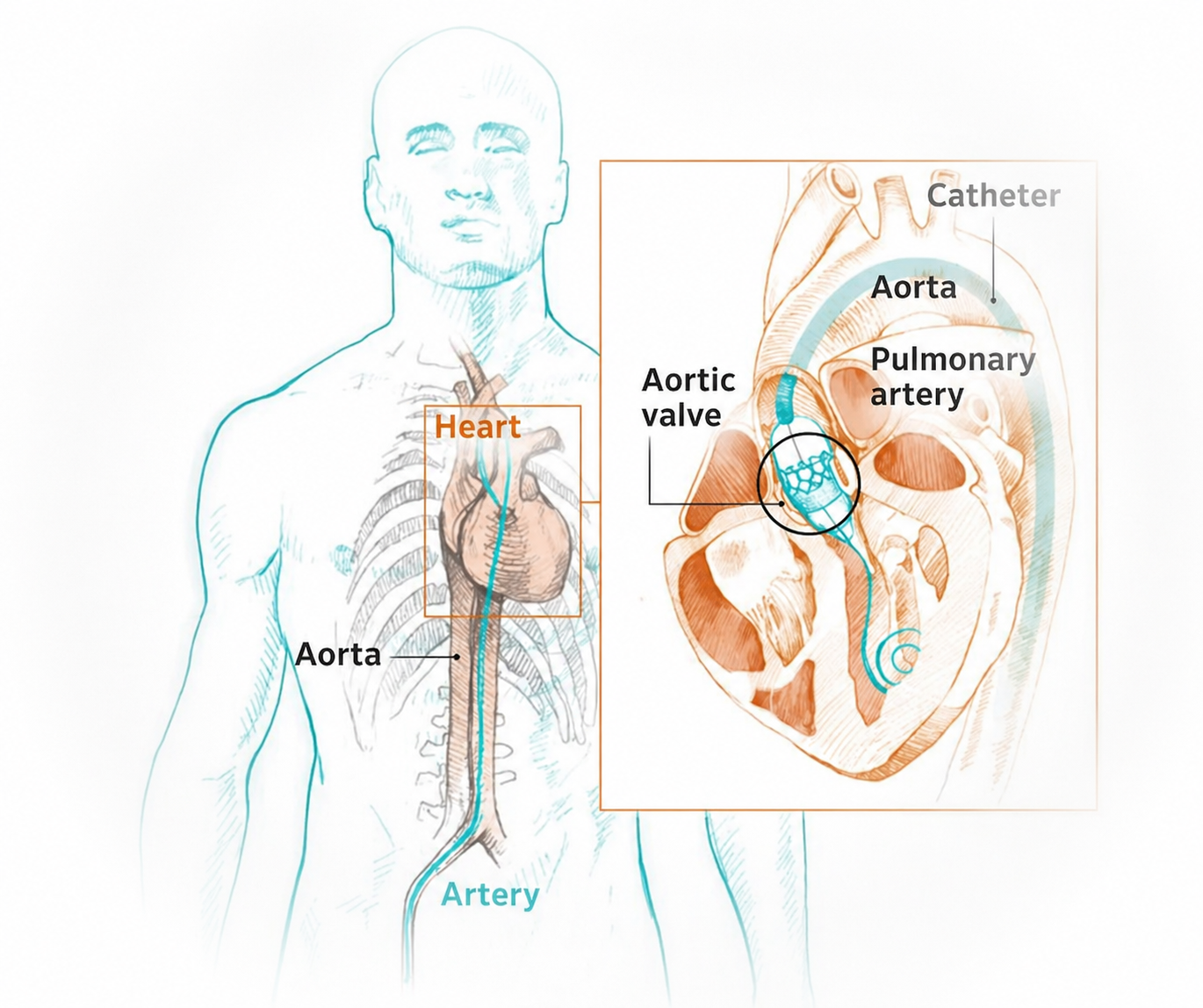
Illustration of a transcatheter aortic valve replacement (TAVR) procedure - via WSJ
To address the needs described above, which are slated to affect a substantial portion of the 70 million Americans to be aged 65 and above by 2030, iCardio.ai is rapidly developing artificial intelligence algorithms that can screen, identify, and prognosticate valvular heart disease, and determine candidacy for lifesaving interventions and pharmacological therapies.
“This is the missing link in the modern care of a cardiovascular patient, where today an echocardiogram is interpreted by an individual clinician, implicit with a singular bias: it remains unsearchable, analog. At iCardio.ai, we are harnessing the capabilities of artificial intelligence to see beyond the human eye and make the care pathway for interventions more efficient and precise.”
— Joseph Sokol, CEO & Co-Founder
We are grateful for the continued support of our existing investors and are pleased to welcome a strategic consortium of additional investors to the round, including Cove Fund, the Alliance for SoCal Innovation, Boomerang Ventures, 100KM Ventures, and others.